Your Leads Aren’t the Problem. Your Booking Process Is.
Most contractors who struggle with lead conversion blame the leads. Wrong platform, wrong audience, wrong time of year. Rhodney Lamar – who runs a referral-only appointment-setting operation across 150 agents – has heard every version of that story. And after booking thousands of calls for home service companies across electrical, HVAC, junk removal, fencing, and more, his conclusion is almost always the same.
The leads are fine. The booking process is leaking.
In Episode 7 of Surge Ahead, Rhodney breaks down exactly where the money is slipping out – and what to do about it.
The Number Nobody Wants to Hear
Rhodney’s opening estimate: most home service companies are leaving 15 to 20% of revenue on the table through their booking process alone. Not bad leads. Not bad marketing. Leads they already paid for, already generated, that simply didn’t get converted because the follow-up was too slow, the script was too bloated, or nobody picked up the phone in time.
That’s not a marketing problem. That’s a systems problem – and it’s one that’s entirely fixable.
Speed to Lead Is King (And Five Minutes Is the Ceiling)
The single biggest driver of booking rate on the outbound side is how fast you respond to a web form or inbound inquiry. Rhodney’s benchmark: five minutes is the absolute ceiling. Miss it consistently and your contact rate collapses.
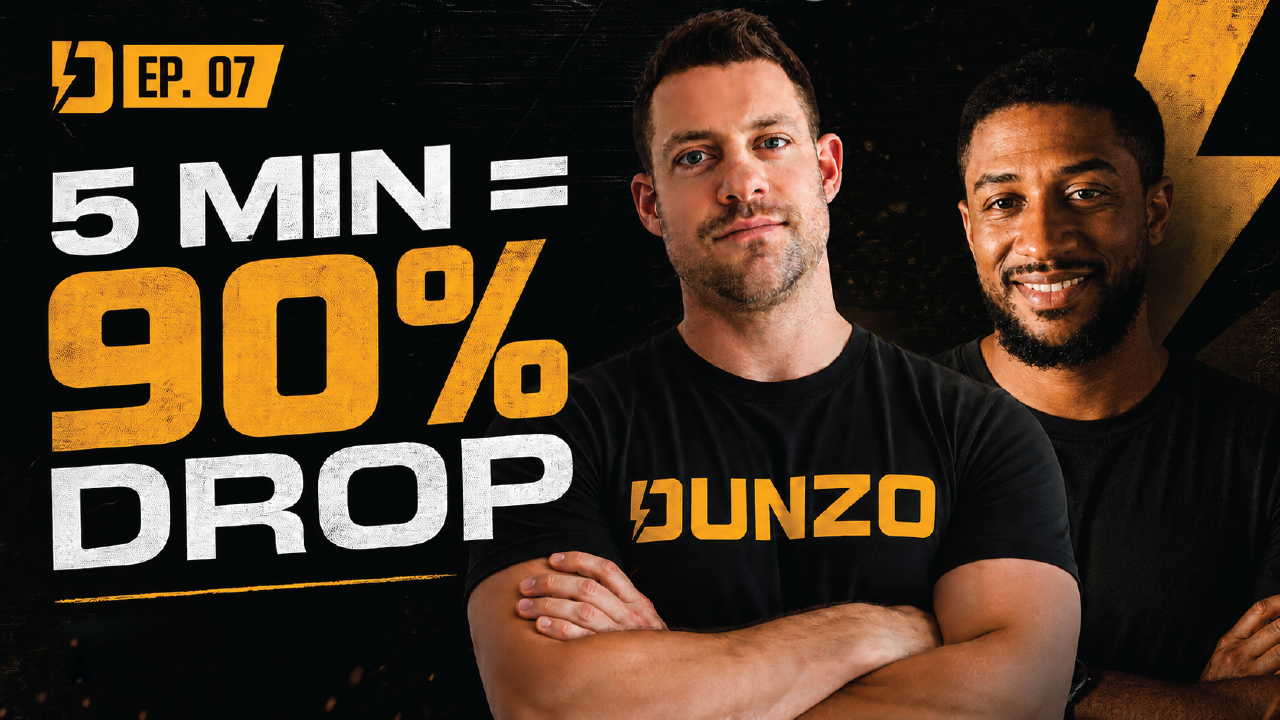
The data backs this up. A study published in the Harvard Business Review found a 90% decrease in chances of making contact on that first outreach past five minutes. Rhodney has seen the same pattern in his own data – and it doesn’t matter how good your script is if you’re calling at the 30-minute mark.
On the inbound side, the threshold is different: three and a half minutes on hold before callers start dropping. That’s your ceiling for answered inbound calls. Anything beyond that and you’re losing people who were ready to book.
Rhodney’s recommendation for operators who can’t always get to calls immediately: use that hold time productively. Custom on-hold messaging that covers your service area, what you do, and basic qualifiers means callers are pre-informed by the time they reach a live person – and that speeds up everything downstream.
The Most Common Mistake: Overqualification
When contractors hand off their booking to Rhodney’s team, the pattern he sees most consistently isn’t under-qualifying. It’s the opposite.
“Overqualification means you’re just talking and talking and talking – almost like you’re trying not to get the business.”
The owner-operator usually knows their business inside out. They know every edge case, every surcharge, every scenario where the job might not work out. And they want all of that communicated on the call. The result: a 20-minute qualifying conversation that burns out the agent, backs up the queue, and kills the next lead waiting to come in.
Rhodney’s sweet spot: three qualifying checkpoints, nothing more.
- Are they in your service area?
- Are they requesting a service you perform?
- Can you get them scheduled within your available time frame?
If all three are yes, the appointment gets booked. Everything else – exact pricing, scope details, job complexity – gets handled on site. Nine times out of ten, it can be.
The Assumptive Close: Stop Asking If. Start Asking When.
The foundation of Rhodney’s entire scripting approach is the assumptive close. The only question the customer should ever have to answer is when – not whether.
“We assume that the people who are calling us want to do business with us. The only option we give them is when do they want to do the appointment. We don’t ask do they like it. It’s which day or time.”
Why else would someone call? They’re not calling to chat. They’ve already decided they need the service. The booking call’s job is to get them on the schedule – not to re-sell them on the decision they’ve already made.
This extends to pricing too. If there are potential surcharges or add-ons, don’t list them out. Factor them into the range you give and move on. Every extra decision you insert into a booking call is another off-ramp for the customer to take.
The 48-Hour Window (And Why Being Booked Out Costs You)
One of Rhodney’s most counterintuitive data points: if you book an appointment more than 48 hours out, there’s a 70% or greater chance it cancels or no-shows.
A lot of owners love seeing a full board two weeks out. It feels like security. What it actually is, in many cases, is a no-show waiting to happen. The further out the appointment, the more time the customer has to find a competitor, change their mind, or forget they booked at all.
For jobs under $1,000 – same-day decisions that can be serviced same-day or next-day – the 48-hour rule is close to non-negotiable. If you’re consistently scheduling outside that window, the question isn’t “how do I reduce no-shows.” It’s “do I have enough capacity to actually service people within 48 hours?”
The Owner’s Personal Call: The No-Show Eliminator
One of the best no-show reduction tactics Rhodney has seen in the field doesn’t come from his team – it comes from the owner. One of his clients personally calls every booked appointment within 24 hours. Just a quick introduction, a confirmation of the time, and a note that they’ll follow up after the service to make sure everything went well.
“They plant that seed and they say, ‘After you get done with that inspection or with that service, I’m going to be giving you a follow-up call just to see how everything went.'”
Rhodney estimates that operator is north of 90% on showed appointments. The personal call costs five minutes. The no-show rate it eliminates is worth far more.
Dispositioning: How to Tell If It’s a Lead Problem or a Booking Problem
Owners blame leads. Marketing agencies defend their leads. Nobody looks at the data.
Rhodney’s fix: every call needs a disposition – a simple record of whether the job booked, and if not, why not. Was it outside the service area? The customer wasn’t ready? Wrong type of job? Script issue?
“Dispositioning will tell you everything.”
Ten calls with disposition data tells you more than a month of gut feelings. If five out of ten calls are outside your service area, that’s a targeting problem – and you can take that specific data to your marketing company and fix it. If ten out of ten are in your area but not booking, that’s a script or conversion problem.
Without disposition data, you’re just pointing fingers. With it, you have a repair manual.
The Three Metrics to Watch
If Rhodney could only track three numbers for any booking operation, here’s what he’d choose:
- Speed to lead – how fast you’re getting to outbound inquiries (target: under 5 minutes, ideally under 2).
- Dispositioning – what’s actually happening on calls that don’t book, categorized and tracked over time.
- Call time – how long agents are spending per call. The target window is 5 to 8 minutes. Go longer and you’re sacrificing capacity; go shorter and you’re probably under-qualifying.
Plug those three numbers in together and you can calculate how many people you need, identify your constraints, and know exactly which lever to pull to improve your booking rate.
The Most Counterintuitive Thing About Booking at Scale
Forrest saved the best question for last: what’s the most counterintuitive thing Rhodney has learned about human behavior after booking thousands of calls?
“Even if you don’t book the job – that person can still become a referral.”
The mindset shift: stop going into every call trying to book it. Go in trying to give the best experience possible. The booking is the natural result of a great experience, not the goal itself. And even when it doesn’t happen, a person who felt genuinely respected and helped on a call is far more likely to come back or send someone else.
That’s what separates the companies that compound over time from the ones that are always starting over.