He’s Sold Multiple Companies. His Rule for Every Single One: Build It Like You’re Going to Sell It – From Day One.
Introduction
Brandon Vaughn doesn’t build businesses to own them. He builds them to sell them. Every single one.
And his argument – backed by multiple exits, 34 franchise locations, and years of operating in the home service space – is that building to sell isn’t a different strategy than building to keep. It’s the same strategy. Because the things that make a business worth buying are the same things that make it worth owning: systems that don’t depend on you, a sales process that converts without you, and a team that doesn’t need you running a truck to make payroll.
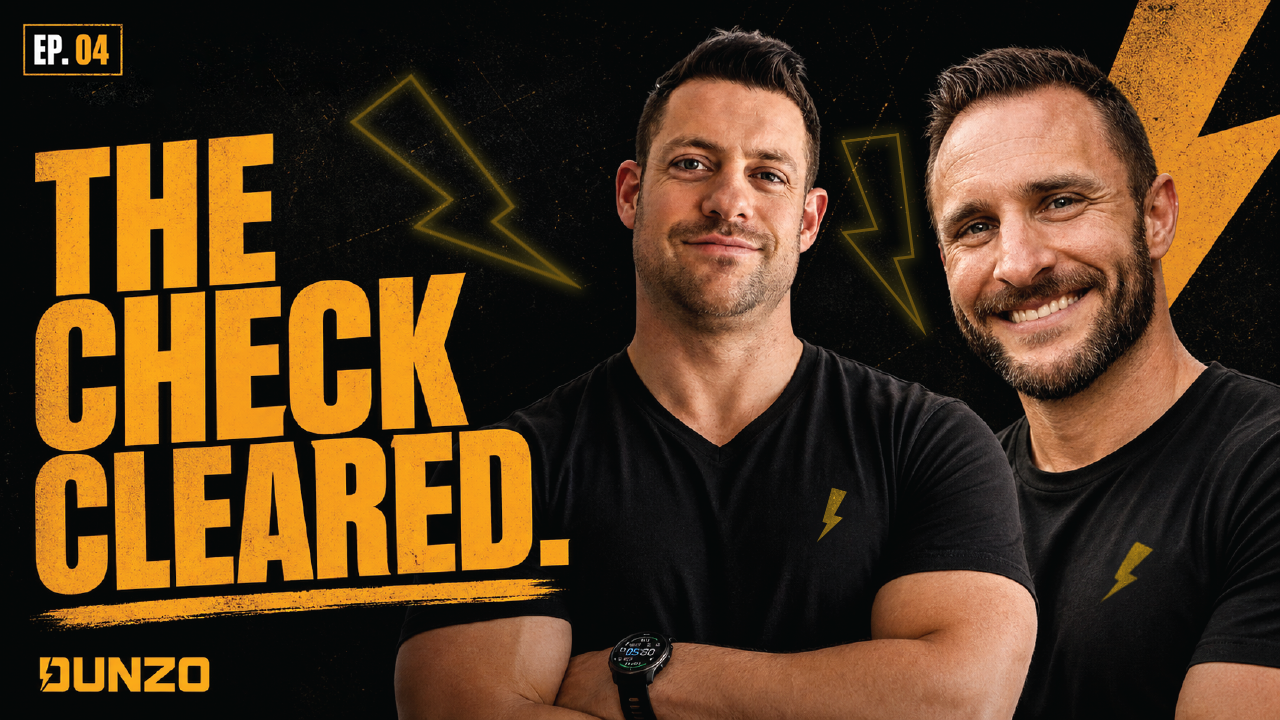
In Episode 4 of Surge Ahead, Brandon shares the mental models behind how he builds, what he’s learned from his exits (including a brutal first sale that cost him 90% of his employees), and why he thinks the hardest-working owner in the building is almost always the biggest bottleneck in it.
The Question Nobody Asks
Forrest opens with an unusual request: what’s the one question you wish someone would finally ask on a podcast?
Brandon’s answer cuts to something most entrepreneurship content carefully avoids: what does success actually feel like once you’ve achieved it?
“A lot of people don’t really ask me what does it feel like to be an entrepreneur today. I’ve achieved success. I’ve done exits. But what motivates me? What does stress look like for me these days?”
His answer: the milestones pass quickly. The celebration fades. What doesn’t fade is the process itself – the act of creation, the load of responsibility, the feeling of running into problems you’ve never solved before.
“I still find myself continually putting myself back into that constant state of uncomfortability. And the more uncomfortable I am, that’s how I know I’m in a growth state.”
It’s a reframe that matters for anyone grinding toward a number they haven’t hit yet: the destination doesn’t deliver what you think. The journey is the product.
What Being a Visionary Actually Means
Brandon spent years calling himself a visionary. He was wrong – or at least, partially wrong.
The ADHD entrepreneur’s version of “visionary” – coming up with more ideas than you can possibly execute on – isn’t the real job description. The real job is the opposite.
“Being a visionary is not just coming up with creative ideas. It’s communicating a very specific area of focus and getting rid of all the other clutter and all the other noise that your team shouldn’t be distracted with.”
The visionary’s job is signal, not more noise. One clear objective the whole company can organize around. Dashboards and KPIs that tell everyone whether they’re hitting it. A team that, if you stopped any one of them and asked “what are we driving toward this quarter?” – could answer without hesitation.
The COO or integrator, by extension, isn’t there to execute the visionary’s ideas. They’re there to kill 80% of them. To be the gatekeeper between the idea factory and the team that has actual work to do.
“It has been the biggest slap in the face over the past five years – realizing how important, how critical that is. That is my most important role as CEO.”
The First Numbers He Looks At
When Brandon walks into any business – his own or someone else’s – the first signal he checks is gross margin.
“If that is broken at the very first get-go, then it’s a pricing issue, a delivery issue, an operational inefficiency.”
From there: find the bottleneck. Is it the demand side (sales and marketing not generating enough) or the supply side (can’t hire, train, or keep the technicians needed to fulfill)? He calls it the world’s simplest business model – a teeter-totter with sales and marketing on one side and production and operations on the other.
Third: customer acquisition cost, or CAC. Does this company actually know where their leads come from? Do they know what it costs to get one? If not, scaling is guesswork.
Three numbers. Gross margin, bottleneck, CAC. Everything else follows from those.
Build It Like You Have No Arms and No Legs
The most memorable framework of the episode is also the most direct challenge to the trades mentality.
Brandon tells a joke – a setup about a man with no arms and no legs – and then flips it: what do you call a man with no arms and no legs running a successful home service business? A really great CEO.
The punchline is the prescription.
“Imagine building your business as if you have no arms and no legs. You have to think about you not being the delivery source.”
The trap is obvious in trades and home service: the owner does the sales, runs the truck, answers the phone. They wear it like a badge. Hard work is the culture. But Brandon’s argument is that this is precisely backwards.
“You actually are robbing your business blind when you decide – well, hey, I’ve got arms and legs, I can go out and I can do all this stuff. No, you can’t. You shouldn’t.”
The reason isn’t laziness – it’s leverage. The owner’s highest-value work is building the infrastructure: the sales playbook, the training systems, the marketing tracking, the SOPs. Nobody else in the early-stage business is going to do that. If the owner is on a truck, it doesn’t get done. And the business plateaus.
The downstream effect compounds in hiring. Your best employees – the A-players who are motivated by growth and promotion – look around and see the boss doing every job. There’s nowhere to go. So they leave. The ones who stay are comfortable with stagnation.
“Your top talent is going to leave and go somewhere else where they can grow.”
The Wise Codings Exit
Brandon founded Wise Codings in January 2021 – a window cleaning franchise built around a zero-to-scale playbook he documented on YouTube as “Map to a Million.” The series covers the first four months of growth from zero to $100K/month.
By the time they sold, they had 34 locations, a mix of franchises and company-owned units, and a growth ceiling they were honest enough to recognize: to serve franchisees at the level a mature franchisor can, they’d need capital and infrastructure they didn’t have. The choices were to grind through the difficult middle period or find someone with the blueprint.
They found Premium Service Brands – a founder-owned company with 20 years of franchising experience, not a PE group. Brandon spent well over a year in casual contact with the buyer before any serious conversation began. He attended their annual event. He interviewed the franchisees directly. He asked hard questions about what it was actually like to work with them.
“Even more than any exit dollar amount – I want to be able to sleep at night knowing I sold to a good company that’s going to take care of them really well.”
That standard came from a painful first exit. Brandon doesn’t name the company, but the story is stark: within 12 months of selling, 90% of his employees had quit. Former employees called him to ask why he’d sold. Customers who had his personal cell number called to complain about quality. He watched something he’d built deteriorate in front of him while the check sat in his account.
“That really freaking hurt. And the check cleared, so that was good. But that really freaking hurt.”
The lesson: find the right buyer before you negotiate the price. Vet the culture. Talk to the people who already work with them. A bad fit will haunt you in ways the earnout doesn’t cover.
Building to Sell Makes You a Better Owner
Brandon’s clearest practical argument: if you build a business to sell it, you end up with a better business regardless of whether you sell.
“If you build it to sell and then you keep it – it’s the same thing. If you build it to sell and you sell it – it’s the same result.”
The standard is: can someone who knows nothing about electrical walk in and run this company? Is the training documented? Is the sales playbook codified? Are there systems for hiring, onboarding, scheduling, and customer experience that don’t live in the owner’s head?
If the answer is no, the company isn’t sellable – but it’s also fragile to own. The owner is the single point of failure. They can’t take a vacation. They can’t get sick. They can’t hire a GM and step back.
Building for a theoretical future buyer is actually building for yourself. The SOPs that a buyer needs to understand the business are the same SOPs your techs need to do the work consistently. The financial dashboards that support a valuation conversation are the same dashboards you need to run the company well.
“Every company I own, I know that I will sell it at some point in time – because you have to. Even if you die, it’s going to sell.”
The AI Tools He’s Building for the Trades
Brandon now spends most of his working time inside a terminal, building AI agents. Two tools are worth knowing about:
Hirebus (hirebus.com): An AI recruiting agent called Iris that contacts, follows up with, and interviews candidates automatically the moment they apply. Forrest gets a live demo during the episode – Iris texts, calls, and emails candidates through a full interview, then produces a scored profile with behavioral assessment, skills gap analysis, and AI-generated custom interview questions. For trades businesses trying to hire master electricians or journeymen at scale, the speed and qualification filtering are the headline benefits.
Cash (youuncashe.com): An AI sales coaching platform built specifically for the trades. Brandon was paying $4,000 per sales rep per year on a competitor’s platform – with a minimum of five users and full-year upfront payment. Cash does the same job at a fraction of the cost: recording, coaching feedback, playbook builder, section-by-section analysis. Currently in soft launch; trial access available by email.
Beyond the specific tools, Brandon’s broader point for home service owners: start building a business brain. Document your knowledge. Create a knowledge graph. Load your SOPs, your sales playbook, your customer service standards into a centralized AI-accessible system your whole team can query.
“How can I download my brain into this? How can I download everyone’s brains into this consolidated, centralized business brain that everyone can talk to and interact with?”
The owners who do this now will have an enormous structural advantage over those who don’t. And the ones who wait – who watch AI develop from the sidelines – risk the version of obsolescence that Brandon’s analogy captures best:
“You don’t want to be the grandpa who doesn’t know how this confounded AI thing works.”
Where to Find Brandon
Instagram + Facebook: Brandon Vaughn LinkedIn: Brandon Vaughn Hirebus: hirebus.com (mention Dunzo for free gifts) Cash (sales coaching): email trial@youuncashe.com